Why Are Multiple Drains Backing Up at Once? Main Sewer Line Clogs Explained
One slow drain is a nuisance. When the toilet, tub, and kitchen sink all back up at the same time, it's a different problem entirely. Nearly every time, it means a main sewer line clog — and the sooner it's cleared, the less damage it does.
What to Do Right Now
- Stop using water. Every flush, shower, or laundry cycle adds to the backup.
- Don't pour in chemical drain cleaner. It rarely works on main line blockages and can make the job more hazardous.
- Check the lowest drains — basement floor drains and lower-level showers are where sewage appears first.
- Call for help. If sewage is coming up into the house, request emergency plumbing service.
Why Several Drains Back Up Together
Your home's drains are like branches feeding a tree trunk. Each sink, tub, and toilet has its own branch line, but they all join into one main sewer line that carries everything out to the city sewer. A clog in a branch affects one fixture. A clog in the trunk affects everything upstream of it.
What the Pattern of Symptoms Tells You
| Symptom | What it usually means |
|---|---|
| Only one fixture is slow | A local clog in that branch drain |
| Toilet gurgles when the washer drains | A partial main line restriction |
| Water comes up in the shower when you flush | A main line blockage downstream of both fixtures |
| Sewage in the basement floor drain | A main line blockage — urgent |
| Clogs return every few months | An underlying cause such as roots, a sag, or a damaged joint |
Common Causes of Main Line Clogs in Denver Homes
- Tree roots growing into joints and cracks
- Grease and food waste that hardens and catches debris
- "Flushable" wipes, paper towels, and hygiene products
- Sags or "bellies" where the pipe has settled and waste collects
- Offset or cracked joints from shifting clay soils
- Collapsed or deformed pipe, especially older Orangeburg or clay lines
How We Find and Fix the Cause
Step 1: Clear the line
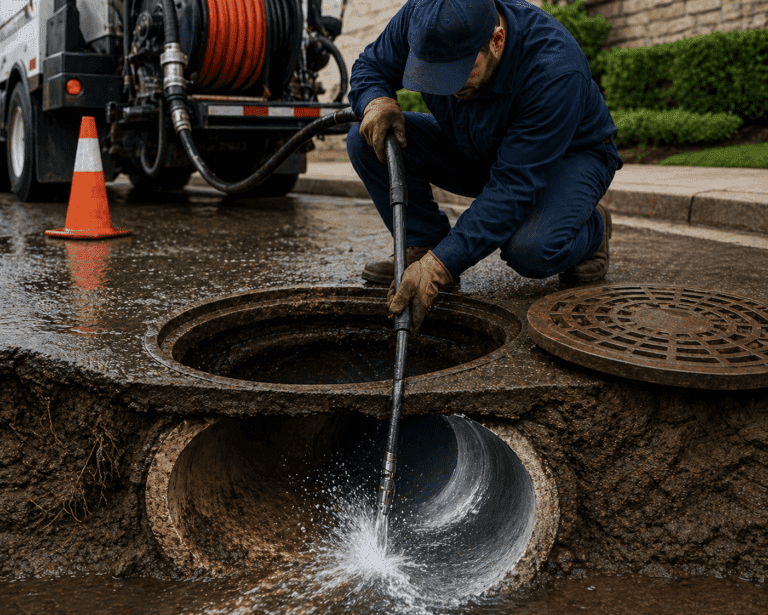
We open the line from the cleanout to restore flow, then run a cable machine with a root-cutting head through the main line to clear grease, wipes, and roots, and follow up with a camera inspection.
Step 2: Camera inspection
A sewer camera inspection shows what caused the clog — roots at a joint, a sag, an offset, or a structural break — and exactly where it is. We share the footage with you.
Step 3: The right next step
If the pipe is sound, cleaning plus a maintenance plan may be all you need. If the camera shows structural damage, you'll have documented proof of the problem and its location to plan the repair.
Who Pays If the Pipe Is Damaged?
In Denver, the homeowner is usually responsible for the sewer line all the way to the public main. Read who pays for a broken sewer line in Denver, and consider service line coverage to protect against future repairs.
How to Prevent Main Line Clogs
- Keep grease out of drains. Let it cool, then throw it in the trash.
- Only flush toilet paper. "Flushable" wipes don't break down like paper and are a leading cause of main line clogs.
- Use drain strainers in showers and kitchen sinks.
- Schedule maintenance cleaning if your line has known roots or a sag — routine rodding keeps it flowing between problems.
- Know where your cleanout is. It speeds up service in an emergency.
If clogs keep returning even with good habits, the pipe itself likely has a defect that only a camera can find.
Serving Homeowners Across the Denver Metro
Imperial Plumbing LLC is based in Centennial and works across the Denver metro, including:
Frequently Asked Questions
Why are all my drains backing up at the same time?
When several fixtures back up together, the blockage is usually in the main sewer line — the single pipe every branch drain feeds into. A clog there stops water from all of them at once.
Can I use chemical drain cleaner on a main line clog?
It isn't recommended. Chemical cleaners rarely reach or dissolve main line blockages like roots or heavy buildup, and they can damage older pipes and create a hazard for whoever clears the line next.
What is sewer rodding (snaking)?
Sewer rodding, also called snaking, feeds a motorized steel cable with a cutting head through the cleanout and down the main line. The head breaks up grease, wipes, and roots so the line flows again, and a camera inspection afterward confirms whether the pipe itself is damaged.
Why does my main line keep clogging?
Repeat clogs usually point to an underlying cause: roots entering a cracked joint, a sag where waste settles, an offset joint that catches debris, or heavy grease buildup. A camera inspection identifies the cause so the fix lasts.
Is a main line clog an emergency?
If sewage is coming up through a floor drain, tub, or toilet, treat it as urgent. Stop using water and call a plumber right away to prevent damage and contamination.
Keep Reading
 Who Pays for a Broken Sewer Line Under a Denver Street? City vs. HomeownerRead article →
 5 Signs Your Main Sewer Line Is Failing (and What Denver Homeowners Should Do)Read article →
 Service Line Coverage in Colorado: What It Covers and Whether It's Worth ItRead article →
Book Your Plumbing Service Today
Tell us what's going on and our licensed Denver Metro plumbers will get back to you fast — usually within the hour.
- $79 In-Home Visit — Waived With Work
- Licensed & Insured · 20+ Years Experience
- Upfront, Transparent Pricing